Manufactured in Nigeria: How RusselSmith Helped Mark a Defining Moment in Nigeria’s Industrial History

On 17 February 2026, RusselSmith did not simply attend the formal launch of the Nigeria Industrial Policy. We contributed a tangible symbol to it, manufactured right here using world-class technology.
Recently, at the Bola Ahmed Tinubu International Conference Centre in Abuja, Nigeria took a decisive step in its industrial transformation journey. Vice President Kashim Shettima, representing President Bola Ahmed Tinubu, formally launched the Nigeria Industrial Policy (NIP) on 17 February 2026 — a landmark national framework for accelerating industrialisation, enabling economic reform, deepening access to finance, and positioning Nigeria as a leading industrial hub on the African continent and in the global economy. RusselSmith’s presence at this event went beyond attendance — we contributed a tangible piece of it.
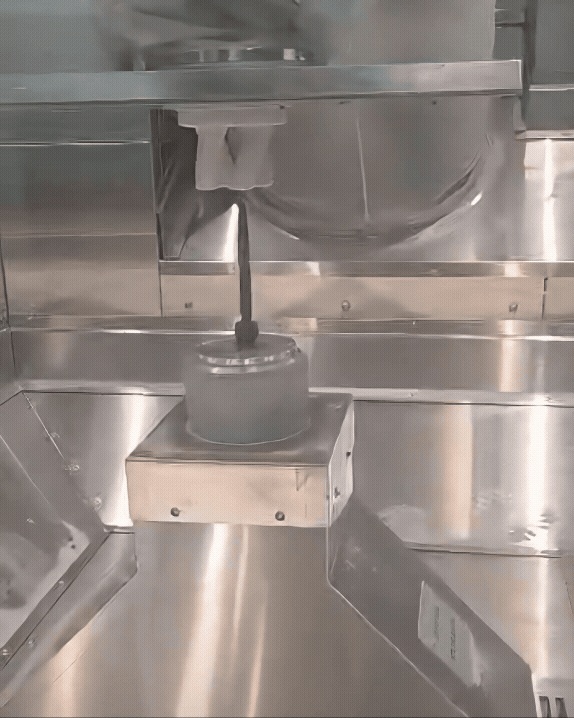
The commemorative plaque presented to the Vice President at this historic ceremony was designed and manufactured by RusselSmith, using our cold spray metallic additive manufacturing technology. It is an object with a significant meaning: proof that Nigerian industry can deliver precision, innovation, and world-class execution, locally.
What the Nigeria Industrial Policy Sets Out to Do
The Nigeria Industrial Policy is a comprehensive framework that reaffirms the country’s resolve to diversify its economy, create inclusive prosperity, and unlock the full potential of Nigeria’s resources, human talent, and entrepreneurial dynamism. First soft-launched in January 2026 by the Minister of State for Industry, Senator John Owan Enoh, the formal ceremony on 17 February underscores the weight the Federal Government places on this agenda.
The document sets out a clear and actionable roadmap for Nigeria’s industrial transformation, identifying priority sectors, establishing enabling reforms, and codifying incentives to ensure industrial growth is not only accelerated but also inclusive, competitive, and sustainable. Its key areas of focus include:
Incentives and Reforms
At the heart of the policy is a robust incentive framework (fiscal, monetary, export, and industrial measures) designed to reduce the cost of doing business, spur investment, and foster innovation. This includes recent tax reforms that harmonise multiple levies, targeted VAT and import duty waivers for renewable energy and priority industries, and the Economic Development Incentive (EDI), which replaces the former pioneer status model with a more transparent, performance-linked alternative.
Access to Finance
The NIP strengthens Nigeria’s development finance architecture by recapitalising the Bank of Industry, scaling sectoral intervention funds, mainstreaming credit guarantees for MSMEs, and introducing interest-drawback programmes and equity-based financing. The policy commits up to 5% of GDP for industrial financing, leveraged through public-private partnerships.
Sectoral Competitiveness
Industrialisation under the NIP is sector-driven. The policy provides targeted strategies for agro-allied industries, solid minerals and metals, oil and gas downstream, chemicals, pharmaceuticals, automotive, electrical and electronics, ICT hardware, energy industries, and fisheries and aquaculture, each designed with value-chain integration, employment creation, and export competitiveness in mind.
Global and Regional Integration
The NIP aligns Nigeria’s industrial strategy with continental and global trade frameworks, including the African Continental Free Trade Area (AfCFTA) and ECOWAS’ ETLS, AGOA, and the UK’s DCTS. The objective is clear: Nigeria must be a net exporter of manufactured goods, a regional supply-chain anchor, and a trusted hub for sustainable investment. The policy was developed with the contribution of the United Nations Industrial Development Organisation (UNIDO).
Sustainability, Innovation, and Inclusive Delivery
The policy mainstreams circular economy principles, clean technologies, renewable energy adoption, and eco-industrial parks, ensuring that growth today does not mortgage the future.
The Plaque: More Than a Keepsake
Cold spray additive manufacturing accelerates metallic powder particles to supersonic velocities using a high-pressure gas stream. Unlike conventional thermal processes, the material bonds through kinetic energy rather than heat, preserving the microstructural integrity of the metal and producing components with exceptional density, strength, and surface quality.
The commemorative plaque presented to the Vice President was not imported or assembled locally from foreign parts. It was designed and manufactured entirely in Nigeria, using RusselSmith’s in-house 3D manufacturing capabilities. That distinction is precisely what the NIP is designed to catalyse at scale.
Why This Policy Is Relevant to What We Do
The NIP’s emphasis on import substitution, local capacity development, and sustainable industrial growth describes work that RusselSmith has been delivering for years, extending the useful life of industrial assets and manufacturing components locally that previously required importation, reducing costs and foreign exchange exposure for clients across multiple industrial sectors.
As a pioneer-status designated organisation in additive manufacturing, RusselSmith also has a direct stake in the policy’s new Economic Development Incentive framework: a transparent, performance-linked model that rewards companies genuinely investing in local capability building. That is precisely what we have been doing.
We welcome this policy as a genuine step forward for Nigerian industry, and we look forward to contributing meaningfully to its implementation.